My Father’s Shadow
by Rachel Willis
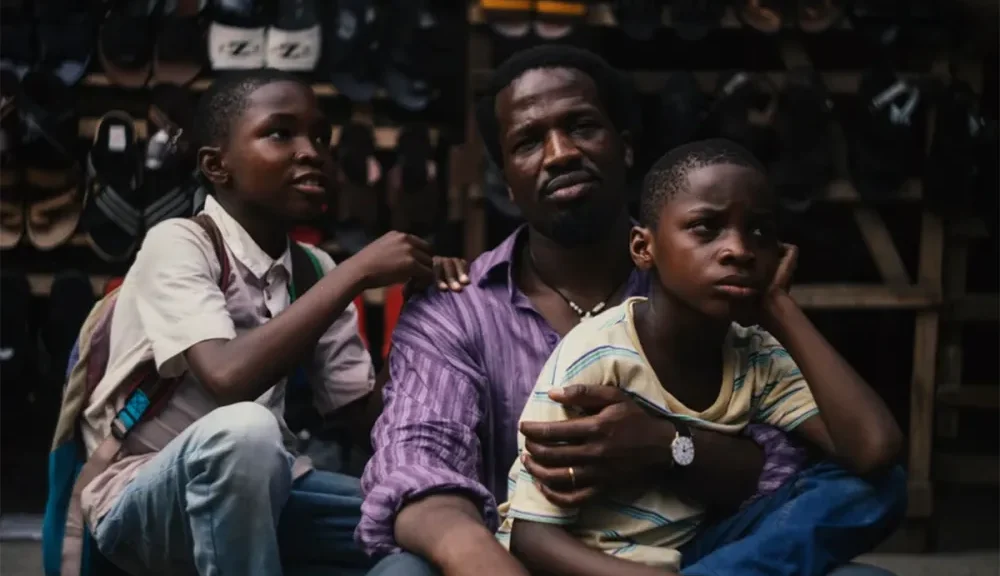
Nigerian brothers Akin and Remi (Godwin Chiemerie Egbo and Chibuike Marvellous Egbo, respectively) are playing in nearby fields when they unexpectedly encounter their father (Sope Dirisu), home briefly from Lagos. The younger boy, Akin, begs their father to stay. Instead, Folarin takes his sons with him back to Lagos in director Akinola Davies Jr.’s film, My Father’s Shadow.
What follows is one day in Lagos with Akin and Remi around the time of Nigeria’s infamous 1993 presidential election.
The boys are our eyes and ears into their father’s world, a world separate from the life they lead with their mother at home. From their father’s interactions with friends and colleagues, Folarin’s great personal investment in the election and the democratization of his country is made clear.
Davies also shows us the chaos of the city around them. Fuel shortages cause vehicles to run out of gas in the streets. People stand outside petrol stations, waiting and hoping to get gas. We learn that Folarin’s situation at work is far from ideal, and the time he spends away from his family trying to bring home more money feels futile.
Anyone who knows Nigeria’s history may know that while the candidate from the Social Democratic Party (Moshood Abiola) won the election—an election declared free and fair by several independent observers— the military regime led by President Ibrahim Babangida cited claims of vote buying. The presidential election was therefore annulled in a televised announcement.
Folarin and his sons are sitting in a café eating dinner when the announcement is made. The people in the café erupt in disbelief and anger, frightening and confusing the boys. As Folarin reacts with anguished rage, a friend pleads with him to flee the city. Davis intersperses archival footage into the narrative, heightening tensions in the film’s final moments.
Davies’s film is touching during the events of the day Folarin spends with his sons, and he gives us enough information to understand what hinges on the election. Still, the truly impactful moments are when the family is attempting to get out of Lagos.
However immediately relevant the storyline seems, the overall message of the film is not political. Instead, it focuses on the importance of family, and the choices we make for them, especially in times of upheaval. It’s something that resonates beyond a single moment in time.

