Dracula
by Hope Madden
There are those who would call Francis Ford Coppola’s 1992 film Bram Stoker’s Dracula a masterpiece. The score is undeniable, the costuming and set design glorious, the use of shadow, the creature design, the pulsing sensuality, Gary Oldman—all of it is exquisite. The entire balance of the ensemble? Terrible. There, I said it.
Still, it’s a memorable take—for many, a beloved all-timer—on Stoker’s vampire classic. I will assume that French filmmaker Luc Besson (Léon: The Professional, La Femme Nikita) is a fan. While his Dracula delivers much in the way of new ideas, the source material for his script is less Stoker’s novel than Coppola’s film.
He’s not hiding it. He even borrows—homages—bits and pieces of Wojciech Kilar’s score.
Caleb Landry Jones is Vlad the Second, Count Dracul. He loves his wife, Elizabeta (Zoë Bleu). He fights the Crusades to eradicate Muslims for God. But God does not protect his Elizabeta, so he curses God and searches the endless centuries, hoping for his loves return.
This storyline is 100% Coppola, not in the novel at all. Landry Jones is a talented actor, and versatile. See Nitram. But his performances tend to be somewhat interior, and you cannot help but compare his anguish over Elisabeta with Oldman’s in the ’92 film. Landry Jones comes up short.
And though Besson manages one pretty impressive wide shot of the Vlad armies, the earth burning behind them, nothing can compare to the macabre puppet masterpiece Coppola brought to the same scene.
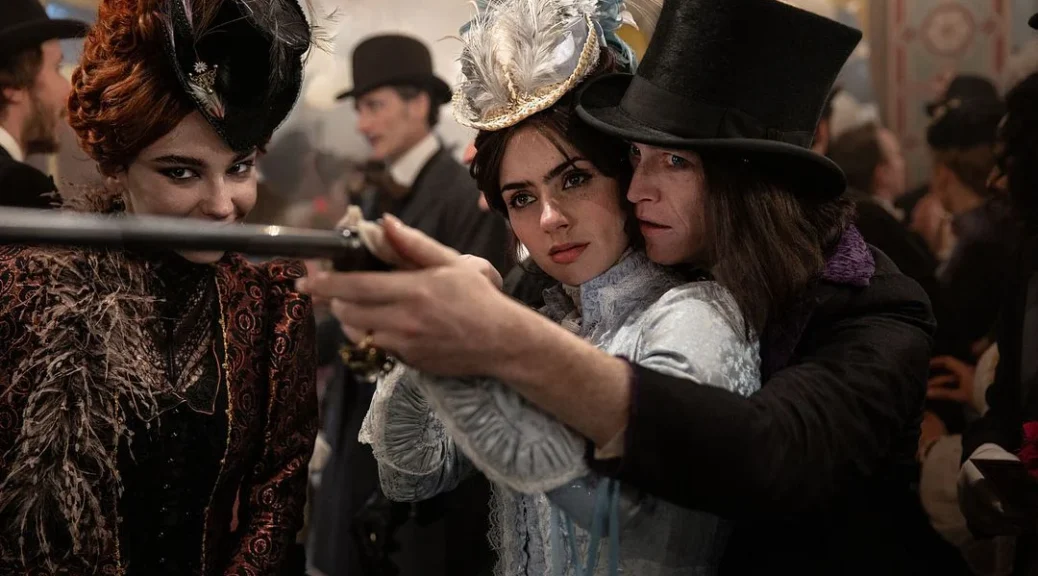
But, after Act 1, the film settles into some new territory. France! No Renfield, no Van Helsing, no fight for Lucy’s hand, no Demeter. Christoph Waltz (a little bit autopilot here) is a priest whose order has been tracking vampires for 400 years. With this storyline, Besson, who wrote the script, forges some new ideas. Newish. And Matilda De Angelis is a particular joy as Dracula’s helper.
Fresh ideas aside, Besson doesn’t bring much Besson to the film. There’s too little action here, and most of it is carried out by little CGI gargoyles, more comedic than thrilling. One scene doesn’t naturally lead to the next, characters feel disconnected to the plot, and, worst of all, it’s very talky and a bit dull. I’d call it a fanciful period piece before I called it horror.
It’s OK to borrow. What’s hard is to come up with anything original, because no fictional character has been on screen more often in the history of film than Dracula. Even Jesus hasn’t been depicted as often in film. So, it’s fine to borrow as long as you can do something new to merit another go. Besson just about accomplishes that. Just about.


