Resurrection
by Matt Weiner
Chinese filmmaker Bi Gan set the bar high for himself with his second feature, the surreal sensation Long Day’s Journey into Night that capped off a dreamy neo-noir with an hour-long single take in 3D.
With his new film Resurrection, it’s clear that Bi’s ambition and technical skill have only grown. Resurrection trades the languorous pace of his first two films for short chapters that meticulously pay homage to distinct filmmaking genres. There’s the opening silent film with its eye-popping production design and nods to Expressionism and early greats like Méliès and Griffith, but if that’s not your taste just give it 20 minutes. Each section gives way to the next, including mid-century noir, a Buddhist parable and even a Y2K vampire love story.
The story (from Bi, with a screenplay by the director and Zhai Xiaohui) loosely unites the wide-ranging chapters—but emphasis on loosely. Jackson Yee plays a Deliriant, a dissident dreamer in a speculative future where “the secret to eternal life is to no longer dream.” These Deliriants must be hunted down by “Other One” (Shu Qi, who also narrates throughout the film).
This is explained at breakneck speed in the opening silent film cards, but don’t worry. The cinematic metaphors tend not to be subtle in each of the chapters, with story taking a backseat to Bi’s dazzling visuals. After the Other One tracks down the Deliriant in the opening chapter, the rest of Resurrection is a projection of his dying dreams across time.
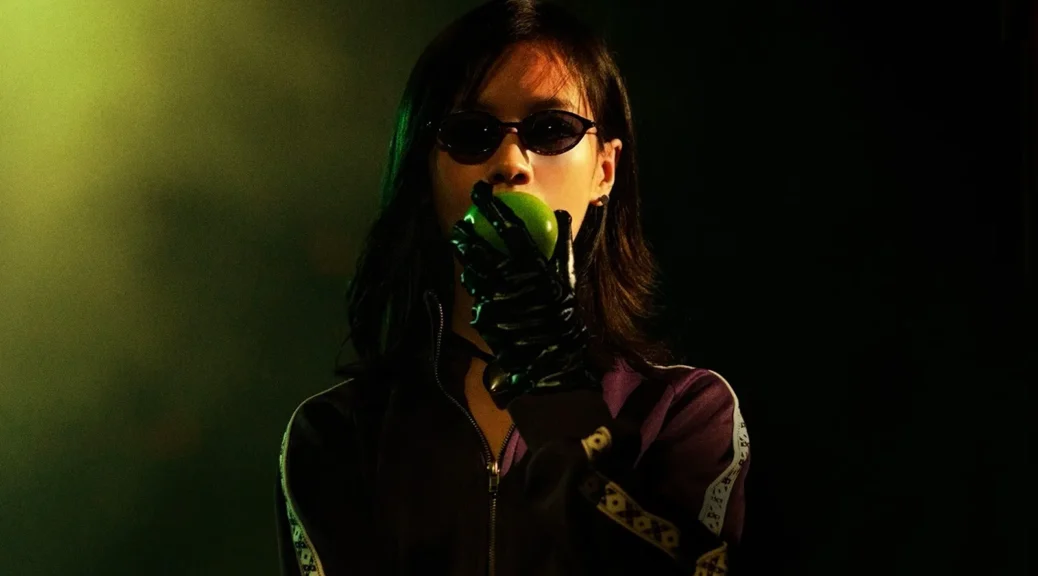
The final chapter is the one with “that shot” – one of Bi’s now-trademark long takes that follows a whirlwind romance between the Deliriant (now a street tough named Apollo) and a vampire singer (Li Gengxi) through Chongqing’s foggy nighttime streets. It’s Before Sunset with vampires plus Bi’s stunning use of light, darkness and color coming together perfectly, and the cinematography is such an achievement on its own that the long take is almost superfluous.
It’s a neat encapsulation of what can be equal parts beguiling and frustrating about Resurrection. There’s a deft bit of poetry on ending with the vampire vignette, as the two lovers seek to find something real, something even more sublime than immortality. (And cinema is also something we find meaning in with each another, but only in fleeting darkness before the lights come up.)
And it also draws attention to its own artifice in ways that might be intentional but, over the course of a 150-minute movie, threaten to overshadow the emotion of an already threadbare story. Bi has the immaculate craft to look back at diverse eras of filmmaking, but the burning question in today’s climate is forward-looking: Can film as an art survive? Can we be at peace with the idea that art is not a cure for suffering but rather a place to find our shared humanity? It’s a little corny or maybe it’s a little deep, or both depending on your tolerance. But the questions are worth asking. Especially from a master technician who is practically demanding that you see this on a big screen, with a hushed crowd of strangers, all in agreement that there is still something essential about the power of stories through moving images on a screen.

